
Does the UK Have Open Banking? Yes, and It Leads
The UK launched open banking in 2018 and now leads the world. How it started, how big it's grown, and what it means when you pay.
Short answer: yes, and it’s not even close. The UK didn’t just adopt open banking. It built the standard half the world now copies, and it’s been live longer than almost anywhere.
When did open banking start in the UK?
January 2018. The trigger was the Competition and Markets Authority’s 2017 retail banking order, which required the nine largest UK current-account providers (the CMA9) to set up a body to design and maintain common banking standards. Those nine: Royal Bank of Scotland Group, Lloyds, Barclays, HSBC, Nationwide, Santander, Northern Bank, Bank of Ireland and AIB.
Open Banking Limited was incorporated to deliver and police the standard, with a deadline of 13 January 2018. In the same window, the EU’s PSD2 rules did something quietly important: they brought third parties into regulation and replaced the old habit of apps logging in as you and screen-scraping your data with proper, secure APIs. You approve access. You never hand over your password.
Wait, isn’t that just SEPA?
Fair question, and it trips a lot of people up. SEPA, the Single Euro Payments Area, is a scheme for moving euros, and the UK is still in it. Even though it’s no longer an EU or EEA country, the UK stayed in as a “reachable” SEPA country, the same outsider-but-included status as Switzerland and Norway. So a UK bank can send and receive euros over SEPA fine, though some EU banks now treat those payments as cross-border and add a fee.
But SEPA only ever moves euros. UK money is pounds, so for everyday domestic payments SEPA never gets touched. The UK runs its own instant rail, Faster Payments, in sterling. The eurozone’s equivalent is SEPA Instant. Same job, different plumbing.
Open banking sits on top of whichever rail is underneath. At a UK checkout it pushes a Faster Payment in pounds. In the eurozone it pushes a SEPA transfer in euros. So when you pay by bank in Britain, you’re riding Faster Payments, not SEPA.
How big is open banking in the UK now?
Big enough that “is this a real thing” stopped being a fair question years ago.
By December 2025 there were 16.5 million user connections, up 36% in a year. Payments climbed to 351 million across the year, a 57% jump, and the APIs handled 24 billion calls. Rewind to early 2025 and the texture is just as telling: a single month, March 2025, saw 31 million payments, roughly 7.9% of every Faster Payment in the country. By summer, usage hit 15.16 million, near one in three UK adults.
The plumbing held up too. Uptime stayed above 99.5% across the year, with banks answering requests in about 324 milliseconds on average. That last number matters more than it looks. Boring reliability is what turns a clever idea into infrastructure.
Why does the UK lead on open banking?
Mostly because it started early and made it mandatory. Plenty of countries waited for banks to volunteer. The UK ordered the nine biggest to do it, set a hard date, and funded a body to keep them honest.
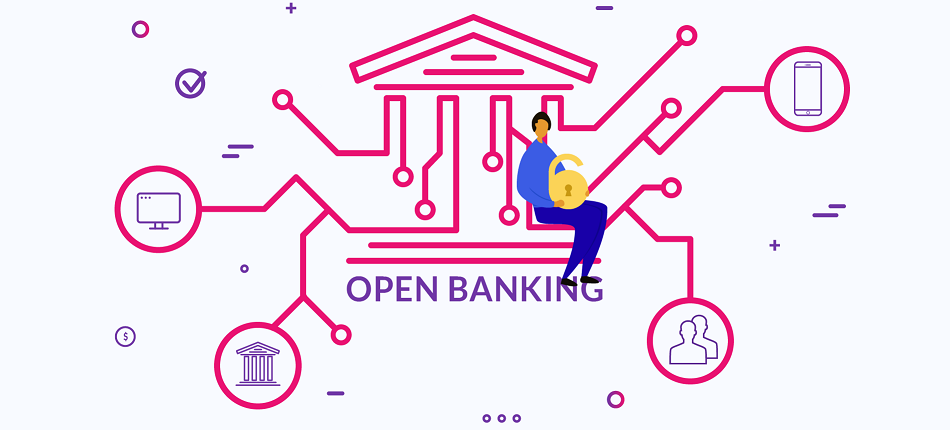
In 2024 the CMA confirmed the full completion of the open banking roadmap, and OBL described 2025 as the year it moves beyond being a competition remedy toward a smart data economy. Seven years in, open banking stopped being a fix with a babysitter and started becoming ordinary financial infrastructure.
What’s changing in 2026?
The grown-up version. Oversight is moving toward a permanent home, steered by the Joint Regulatory Oversight Committee (JROC). The Data (Use and Access) Act, passed in 2025, sets up “smart data” schemes that extend the open banking model into other sectors, and it reserves a central role for the Financial Conduct Authority in running them. The statutory instrument expected to give the FCA formal oversight of the ecosystem is due before Parliament in late 2026.
Translation: the rails aren’t going anywhere. They’re getting a proper landlord.
What open banking means when you actually pay
Here’s the part I care about at Zahlo. All those numbers rest on two abilities: reading your account data with permission, and initiating a payment straight from your banking app. That second one is the engine behind pay by bank.
When you pay by bank, there’s no card in the loop. You approve the payment in the app you already trust, and the money lands in the merchant’s account in seconds. For the merchant, that’s the difference between card fees of around 2.8% and a flat 1% plus a small fixed fee per transaction. On a couple of million in sales, that gap is real money, the kind that pays a salary, and a slice of it can go straight back to the shopper as cashback.
So, does the UK have open banking?
Yes. One of the oldest, busiest and most reliable systems on earth, with the rules tightening up rather than loosening. The interesting question now isn’t whether it exists. It’s how much of your everyday spending moves onto it next. If you run a checkout, that’s not a someday question, and it’s exactly the one Zahlo was built to answer.
Frequently asked questions
When did open banking start in the UK?
January 2018. A 2017 CMA order required the nine largest banks (the CMA9) to open secure APIs, and the EU's PSD2 rules reinforced it the same year.
Is open banking safe in the UK?
Yes. Third parties must be FCA-authorised, you approve each connection inside your own banking app, and you never share your login. The system held above 99.5% uptime across 2025.
Does the UK use SEPA or Faster Payments?
Both, for different things. SEPA moves euros and the UK is still a member. Domestic pound payments, including pay by bank, run on Faster Payments in sterling.